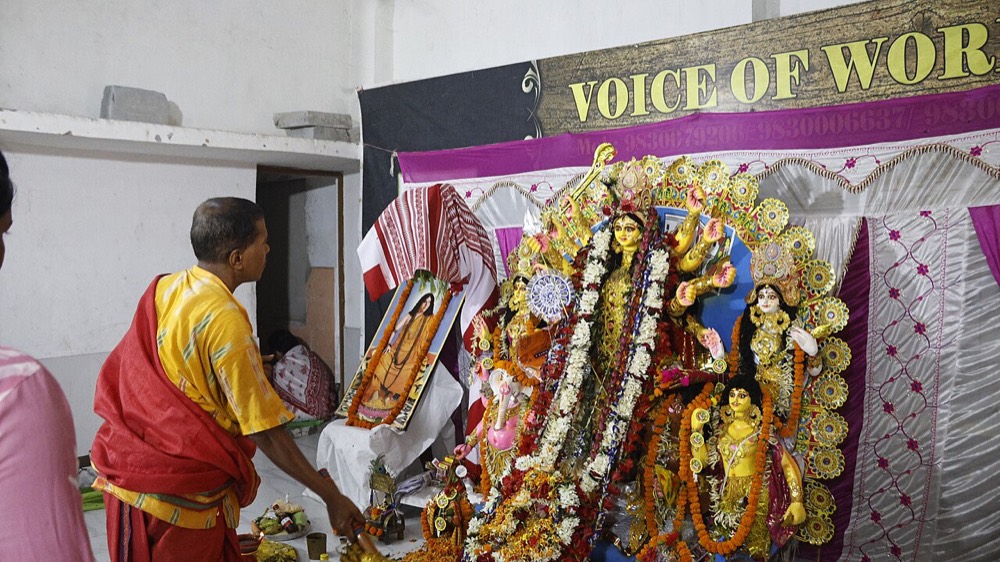
Navratri — the nine nights of the Goddess — is the spiritual high point of the year at Chandrabadani.
Maa Chandrabadani Devi — also spelled Chandrabadni — is one of Garhwal's most revered Siddh Peeths, the place where, by tradition, the torso of Goddess Sati came to rest. For a shrine devoted to the Mother in her full Shakti, no festival matters more than Navratri, the "nine nights" when the Devi is worshipped in her many forms.
Two Navratris each year
The Hindu calendar holds two principal Navratris, and both are observed at Chandrabadani:
- Chaitra Navratri — in spring (around March–April), as the hills turn green and the pilgrimage season opens.
- Sharadiya Navratri — in autumn (around September–October), the most widely celebrated Navratri across India, when the post-monsoon air is crisp and the views at their clearest.
Exact dates shift each year with the lunar calendar, so confirm them before planning a visit.
What happens on the summit
Through the nine days the temple's rhythm intensifies. The Shri Yantra in the sanctum receives special pujas and elaborate rituals; devotional songs and bhajans rise on the mountain air, communal feasts (bhandaras) are shared, and the sunrise and sunset aartis draw their largest, most fervent gatherings of the year. Pilgrims climb in numbers, and the normally windswept, silent peak becomes a place of colour and collective prayer.
Navratri and the April fair
The spring season also brings the temple's great April fair (mela) — the year's largest gathering at Chandrabadani, organised by the temple committee and surrounding villages. Together, Chaitra Navratri and the mela make spring the most vibrant time on the mountain. Read more on the Festivals page.
Planning a Navratri visit
- Expect crowds. These are the busiest days of the year — start early to reach the summit for the morning calm or the sunrise aarti.
- Book stays in advance around Jamnikhal, Devprayag or New Tehri; there is no lodging at the summit itself.
- Dress for the weather — spring and autumn are pleasant but the summit is breezy and cool; carry a warm layer and sturdy footwear for the ~1 km climb.
- For the full route, see our Chandrabadani Devi yatra guide and the Plan a Visit page.