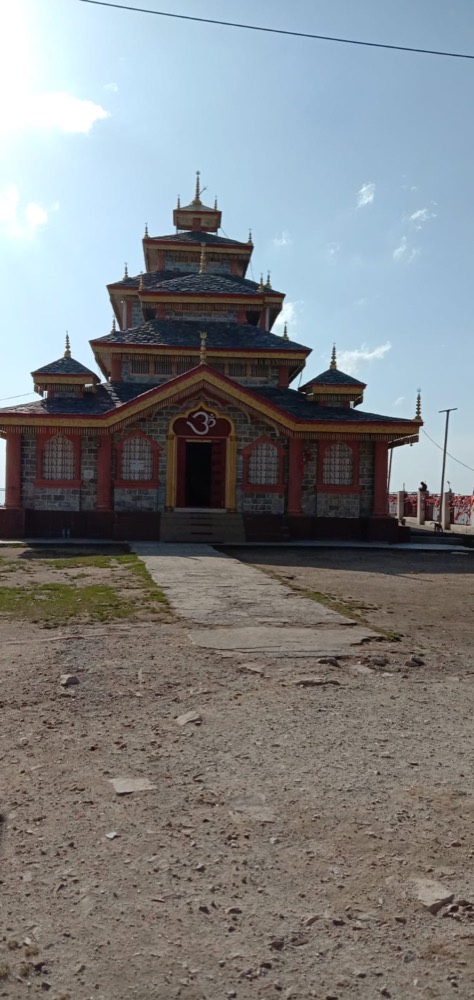
Surkanda Devi, one of the three Siddh Peeths, is visible from Chandrabadani on a clear day.
Across the ridges of Garhwal, three goddess shrines are spoken of together as a sacred triangle: Chandrabadani, Surkanda Devi and Kunjapuri. Each is a Siddh Peeth — a seat of the Divine Mother's power — and tradition links all three to the ancient story of Sati and the fallen body of the Goddess. Many pilgrims make a point of visiting all three on one circuit through the hills above Rishikesh.
Chandrabadani Devi — the torso
At 2,277 m on Chandrakoot mountain, Chandrabadani marks the place where, by tradition, the torso (kandh) of Sati came to rest. There is no idol in the sanctum — the Goddess is worshipped as a Shri Yantra carved on stone. The summit offers a near 360° sweep of the Garhwal Himalaya, and the shrine is famous for its once-a-year blindfolded canopy ritual. Learn more on the home page or read the full legend.
Surkanda Devi — the head
Perched on a high ridge between Mussoorie and Chamba (near Kaddukhal), Surkanda Devi is associated with the place where the head (sir) of the Goddess is said to have fallen — the name itself echoes this tradition. Long a steep walk from the road, the shrine is now also reachable with the help of a ropeway, making it one of the more accessible peeths of the region. On a clear day, Surkanda and Chandrabadani are visible from one another across the valleys.
Kunjapuri Devi — the upper body
Nearest to Rishikesh, above Narendra Nagar, Kunjapuri is reached by a short climb of stone steps to a small summit temple. It is celebrated above all for its sunrise views, when the snow line — Banderpoonch, Gangotri and Chaukhamba — turns gold above a sea of valley mist. By tradition it marks where the upper part of the body of the Goddess fell.
Visiting all three
The three shrines sit on different ridges, so a complete circuit is usually spread over two to three days, based out of Rishikesh, Tehri or Chamba. A common rhythm is Kunjapuri for sunrise on the first day, Surkanda the next, and Chandrabadani — the quietest and highest in feel — to close the journey. Roads, weather and the final climbs vary at each, so plan generous time and confirm conditions locally.
For the Chandrabadani leg specifically, see our yatra route and itinerary guide and the Plan a Visit page.