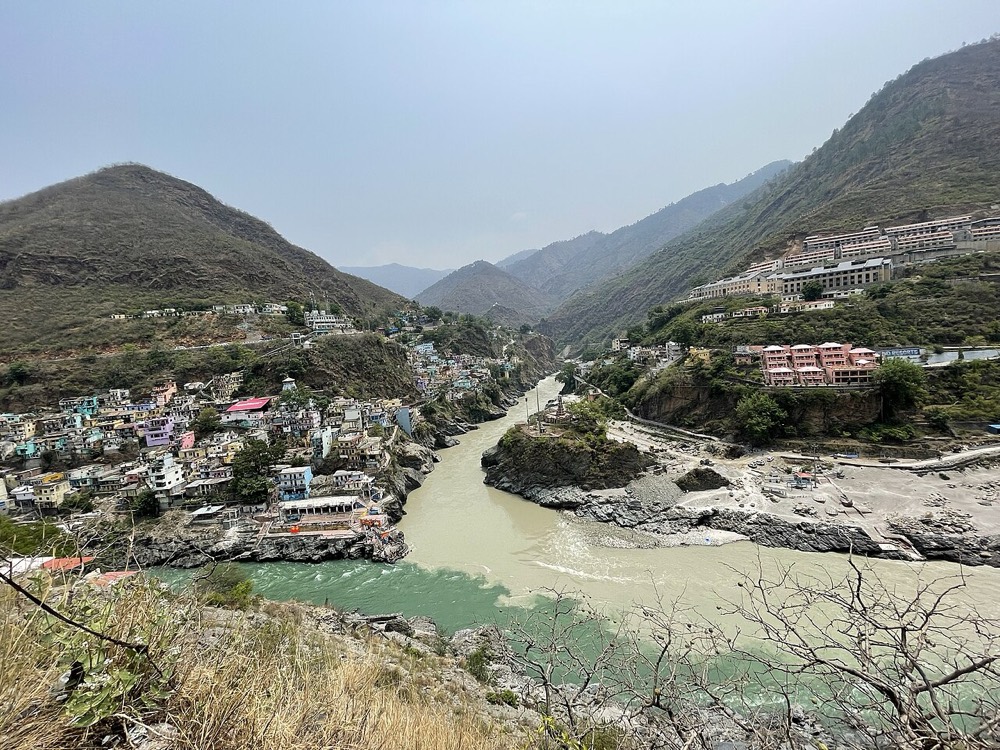
The Badrinath highway follows the Alaknanda through Devprayag on the way to the temple road-head.
Maa Chandrabadani Devi sits at 2,277 metres on the summit of Chandrakoot mountain in Tehri Garhwal, roughly equidistant from Devprayag and the Tehri Dam. The journey is part of the pilgrimage: a steady climb out of the Ganga valley into pine-clad ridges, ending with a short walk to one of Garhwal's most revered Siddh Peeths.
How to reach Chandrabadani Devi
Almost every route converges on Rishikesh, the gateway to the Garhwal hills and the nearest major railhead.
- From Delhi: Delhi to Rishikesh is about 230 km (6–7 hours by road, or an overnight train). From Rishikesh, continue into the hills.
- By air: The nearest airport is Jolly Grant, Dehradun (about 120 km from the temple). Taxis run from the airport towards Rishikesh and beyond.
- By rail: Rishikesh station is the closest (about 108 km from the shrine).
From Rishikesh the road follows the Badrinath highway along the Alaknanda to Devprayag (~74 km), then climbs about 31–32 km of mountain road to Jamnikhal, the road-head for the temple. From the taxi stand, a moderate ~1 km trek (about 30 minutes) leads to the summit. For the full step-by-step breakdown, see our Plan a Visit page.
A simple two-day itinerary
Day 1 — Reach Rishikesh by morning. Drive to Devprayag, pause at the sacred confluence of the Alaknanda and Bhagirathi, then continue to Jamnikhal or stay near Devprayag / New Tehri for the night.
Day 2 — Start early for the short climb to the shrine, aiming for the morning calm or the sunrise aarti. After darshan, descend and, if time allows, visit Tehri Lake or Buddha Kedar on the way back.
Pilgrims with more time often combine the trip with the other goddess shrines of the region — see The Three Siddh Peeths of Garhwal.
Darshan timings
The temple is generally open from around 6:00 AM to 7:00 PM daily, with aartis at sunrise and sunset — the most rewarding hours to be on the summit.
Best time to go
April–June and September–November bring clear skies and the finest Himalayan views — on a clear day you can see Surkanda, Chaukhamba, Kedarnath and Badrinath. The monsoon (July–August) can trigger landslides on hill roads, and winter brings snow and cold but a serene, uncrowded shrine.
Where to stay
There is no lodging at the summit itself. Simple stays are available around Jamnikhal, Devprayag and New Tehri; many pilgrims base themselves at Rishikesh or near Tehri Lake and make a day trip to the shrine.
What to carry
- Water and light snacks — facilities near the shrine are basic.
- Sturdy footwear for the trek and a warm layer; the summit is breezy and cooler than the valley.
- Cash for offerings and the small shops near the temple.
- Start early to descend before dark, and confirm road conditions and taxis locally before you set out.